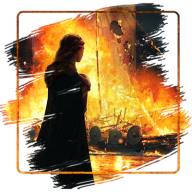
Amelia Wulfhart
𝕰𝖍𝖗𝖊 𝖉𝖎𝖊 𝖂𝖔̈𝖑𝖋𝖎𝖓𝖆



Objective: To codify and describe the Barony of Dornhal and its settlements
Category: Province
Image Credit: Nef | AI Images | Maps by Me (Inkarnate) | Diego Teutli | Saeed Ramez | Roberto Bianchi | Novigrad Witcher 3 | Jamesrpgart Pinterest (Unable to find Source)
Development Thread: N/A
Permissions: N/A

Name: The Barony of Dornhal
Climate: Dornhal features harsh weather, heavy pouring rains that cause the rivers to swell and surge, making the risk of flooding a constant in spring for river settlements. Fog settles between the forest and the mountains, hanging there for hours. Sometimes days pass while the fog remains dense enough that visibility is only a few dozen meters.
Winter in Dornhal is long and cold, lasting snow falls blanket the barony for almost five months, drifts growing deep in the mountains enough that they must be excavated to allow for travel. Spring arrives late, shortening the planting seasons around the swollen streams and rivers and expanding marshlands as snow melts and feeds into them. Summer is mild, rarely uncomfortable save for the frequent soft showers of rain that occur. Autumn breaks away to damp fogs that settle across the whole valley.
Some rare and unnatural weather systems that exist are Razor Hail, hail storms affected by the high winds coming from the Tanast Mountains. These small jagged needles or hooked shards of ice fall at sharp angles, driven by erratic winds that make them capable of slicing exposed skin, sometimes punching through cloth. Livestock left out in such a storm are usually lost, either having panicked and fled for cover or killed by an accumulation of cuts and punctures.
Terrain: In the north the forests of the Bergewald form dense evergreen canopies, darkening it throughout the day. In the depths of the forest some say a person cannot tell the difference between night and day. Undergrowth is sparse in the deep forest, but becomes a tangle of brambles and roots and small foliage nearer to the edges.
The Tanast Mountain foothills form long rolling ridgelines and deep carved valleys residing between the shoulders of the range, descending steeply into the river valleys. The rivers and snow melt feed the Moors in the floodplains beneath the mountains. The soil near the mountains is rugged and poor for farming, making subsistence farming difficult for small communities, and so many farmers raise hardier livestock to supplement what they can grow, especially goats and chickens.
The Emscher River forms the largest waterway in the Barony, a tributary of the larger Duna river further north. The Emscher originates in the Tanast Mountains and is fed by many small creeks and the Grey Water Moors. The Schlammig River in the east is fast moving and brown colored from sediment run-off from the mountains with a muddy bottom.
Natural Resources: Lumber, Iron Ore, Silver Ore, Cattle, Fishing
Demographics:
- Wandenmen: 62%
- Ostermen: 34%
- Other (Merelesian, Baetan, Mediolani): 3%
- Other (Parian, Priman, Ceshi): 1%
Languages: High Osterman, Low Osterman
Key Industries:
- Logging takes place in several villages and hamlets at the edges of the Bergewald, processing lumber into usable wood for structure building, production of weapons and tools, and boat construction.
- Silver and Iron mining can be found in the Tanast Mountain Foothills, particularly in the rocky ravines beneath the peaks.
- Cattle ranching and fishing form the bulk of the meat supply within the barony.

Geographical Highlights: The largest marsh in the barony by a wide margin is the Grey Water Moor, created by sitting in the valley between two large mountainous regions, it feeds the Emscher River with slow, greyish water that almost seeps through the land. The bogs and grassy islands that form are difficult to traverse, some of the islands are detached floating patches of swamp grass, shifting around the Moors as they move. Sparse, almost dead trees stab from the surface of the water like broken teeth, their branches forming weird angles that appear almost designed. It is almost perpetually cloaked in fog and mists that grow deeper and thicker in winter. Haglights appear in the swamp at night, seeming like lantern lights through the mists that hang over the swamps, luring people off the trails or paths never to be seen again. Peasants don't know if it's just swamp gas reflecting light, or something more sinister preying upon the curious. Regardless, it is best to travel in a group through the Moors, and never stray from the path.
Galgenbruch, the Gallow's Marsh, sits along the Schlammig River in eastern Dornhal, just south of Ebenfluss. The dark, muddy river pushes into Galgenbruch. Unlike the Grey Water Moor, Galgenbruch is heavily wooded, swamp trees with thick branches that cast shadows into the marsh. Most of the marsh is shallow, but in spots it deepens enough to submerge a horse and knight suddenly, making even a single misstep dangerous for an armored man.
The Blackbough Forest is an evergreen forest on the eastern edges of the Barony, straddling the one worn path leading eastward from the Barony. In the forest even leaves of the trees are darker than elsewhere, the trees grow densely packed, with charcoal grey bark. It creaks and groans at night, as though the trees are communicating with one another, or answering an ancient call to action. The paths through the forests wind and bend, disappearing behind clusters of trees. Locals insist the trees move, changing the safe paths through whenever peasants start to get used to using one.
Nebelhorn, the Mist Peak, is a mountain that lies between Oreton and Benek, perpetually covered in mist with its peak obscured by them. Rushing winds carry Razor Hail storms into the lowlands during the late autumn months and early winter. The mountain has numerous caves, but all open above the mistline where most people do not dare to go. Some farmers claim the jagged peak is home to a tribe of flesh eating humanoid monsters who control a dragon, but these claims are dismissed as superstition by most people.
Fauna: Dornhal is home to many natural fauna, herbivores including Aurochs, deer, rabbits, squirrels and the like, birds such as White-Tailed eagles, falcons, hawks, sparrows, and many others. Predators like wolves, bears, and wildcats dwell away from civilization as well. With its many rivers, Dornhal is home to several species of fish, such as trout, herring, walleye, and pike which are all used for food by the local peasantry.
However, it is also home to more unnatural creatures in rare numbers. Most people have never actually seen any of these beasts, but for some know to be aware of their existence and the implicit danger they present to mankind.
-
DROWNERS
Drowners are pale fish-like humanoids with slick, scaly skin, webbed hands and feet, and faintly glowing eyes that catch even the weakest light along the shoreline. They appear soft, and slightly bloated, but they have a strong grip, unnervingly quick in the water and well coordinated. When still they are difficult to see, only small traces of bubbles breaking against the surface of the water above where they lurk. Relatively common throughout rivers, marshes, and lake edges, they are one of the few unnatural threats most people in Dornhal both believe in and understand.
They are methodical hunter that operate in small groups, usually in threes, each taking a role in the kill. One drags the victim off balance and into the water, another restrains, and the third ensures the head of the victim is forced beneath the surface until drowning or strangulation is complete. They do not frenzy or overcommit; their attacks are quiet and calculated. They strongly prefer isolated or inattentive prey and will rarely engage groups unless they believe they can overwhelm them quickly or are forced into a corner with nowhere to hide. If met with significant resistance or quick injury, they often withdraw without hesitation, retreating into the water where pursuit is difficult.
Drowners are not driven by malice or hunger for humans specifically. They are opportunistic predators that feed on whatever enters their territory, be it livestock, wildlife, or people. They constantly weigh the cost of the hunt against its reward, ensuring they suffer the least danger for the most reward. This makes them both predictable and manageable; regular patrols, group travel, and vigilance are often enough to keep them at bay. -
NACHTSCHRAT
Gaunt, wolf-bodied creatures with elongated forelimbs that stretch into leathery wings, allowing it to move on all fours and through the air with terrifying speed. Its head is bat-like, dominated by oversized ears and a gaping, fanged maw. Its eyes are sensitive, so much so that daylight causes it visible pain. It roosts in mountain caves and cliff faces, emerging only under the cover of darkness. While not widely seen, enough survivors exist that its presence is acknowledged by those in the highland regions and who have traveled there.
It hunts alone, relying on sound as much as sight, using echolocation to track prey in darkness. Its most feared ability is the so-called "Black Breath", a shriek that causes physical pain, sometimes causing ears to bleed. It is also able to induce supernatural terror, capable of overwhelming the weakest wills and disrupting disciplined groups. Though dangerous, they can be slain by conventional means, and trained soldiers can repel it with preparation and nerve. -
LUREFOLK
Lurefolk are small elusive entities that appear most often to children, taking on forms that seem playful, harness, or familiar to them. Their features are never fully clear, slightly wrong proportions, too-still expressions, or movements that don't quite match human rhythm. Their existence is debated, with most adults dismissing them as superstition, though stories of missing children persist across Dornhal.
The Lurefolk do not attack directly, instead they influence perception. Leading individuals off paths, disorienting them, or drawing them deeper into dangerous areas. They can form conditional relationships with humans through offerings of sweets and treats from a village, becoming protective in limited ways, though always self-serving. When such a pact is upheld, they will subtly influence children away from danger, help keep them within the bounds of the village, and potentially dissuade bandits with their magic. But should the offerings stop, they will usually become increasingly malicious until they become bored and move on. -
SPIRITS
The spirits of the lingering dead, bound to the world by unfinished business, trauma, or unresolved purpose form a dangerous and largely misunderstood threat in Dornhal. They manifest in many forms, the Lady in White who hunts unfaithful men, banshees whose mournful wails echo out on the moors, the discarded unborn botchlings, vengeful spirits bound to a place or object, and death omens who appear to the soon-to-be victims of their own killer. Their presence is rare, often debated with some natural phenomena attributed to these spirits and much evidence of a spirit explained with other reasoning, said to be swamp noises or odd wind.
Typically they cannot be harmed by conventional means, their claws passing through armor and flesh alike, inflicting injury internally, though some may still slash skin. They can be resisted and contained: iron disrupts their physical form for a time, salt and silver can bar or trap them, and holy symbols can ward them away. These spirits are not slain, so much as they are sealed or resolved, often through rites, justice, or the settling of whatever binds them to the world. -
GRAULMANGR
The most fearsome, and least known, creature to call the darkened corners of the Bergewald their home is the Graulmangr. Gaunt, emaciated humanoid creatures with patches of mange and fur along their shoulders and back, elongated limbs, and the exposed skull of a deer crowned in antlers where its face should be. Its mouth is filled with wolfish fangs and its body moves with unnatural speed and silence, whether on two legs, all fours, or climbing the trees themselves. Their existence is effectively unknown, as almost none who encounter the creatures survive long enough to speak of it.
The Graulmangr are terrifyingly few in number, humans born from curses carried by cannibalism. What was once a man made the ultimate choice of self-preservation at the cost of another human life, and that selfish greed warps them into fiends. They are driven by the single-minded purpose of relief, gained only in the instant they consume human flesh, and gone again as soon as the morsel hits their stomach. However, they are not fools. They are predators of unmatched skill, tracking and following their prey for miles to pick the perfect moment to strike, mimicking voices to lure prey unawares, setting traps and ambushes with horrifying precision. A graulmangr will strike when a group is at their most vulnerable, picking them off one by one until none remain.
First and foremost, these beasts know how to survive lean winters, and know how to extend a meal from a feast into rations. Most often the beast will not kill its prey, but keep them trapped in a lair, eating their eyes and feet first and then slowly consuming the person over weeks or months. Sometimes they will keep a small group, portioning them out to make up for long lengths without a proper prey. They do not require sustenance to survive, but require human flesh for the smallest relief from their insatiable hunger.
The presence of a Graulmangr is marked by unnatural silence - all wildlife cease activities when it is near, not mice or squirrels, no birds chirp. Everything hides except those who civilization has taught not to notice when nature goes silent. They cannot be killed by ordinary means, but are warded away by warmth, and fire which burns them. Wrought Iron driven through their heart can slay them, but only with great effort and great risk. Most never realize they are being hunted until it is already too late.
Flora: Bluteiche, or Blood Oak, are low sprawling trees that seem to grow less upward as they lean into the world around them. Their trunks twist in slow, deliberate spirals, bark ridged and furrowed like old scars. Rather than rising proudly, their branches arc outward and downward in long sweeping curtains of leaves, heavy, dense. Moss and lichen cling readily to their bark, often giving the impression the tree is dying, but they can live for many centuries. In the fog-laden regions like the Grey Water Moor, they appear as looming silhouettes, half obscured by mists. Their leaves are oak-like, but with a deep green tinged with iron-red veins, almost like blood vessels.
Their blood red sap, their name sake, makes for a potent topical antiseptic and antihistamine, with the locals using it to treat wounds to help prevent infection and ease skin rashes. Sometimes it is dried and powdered for storage. When consumed it is mildly toxic to humans and most livestock, causing nausea and vomiting, and in cases where large amounts are consumed the resulting symptoms can last long enough to risk death by dehydration.
Inhabitants: The primary inhabitants of Dornhal are Wandenmen, southern Ostermani people who are less militarized than their northern cousins. The common folk are often farmers and artisan, while the nobility are more diplomatic than they are warlike, preferring tournaments to marching off to war. The Wandenmen have a culture of hospitality, it being taboo to refuse a guest. The influx of Osterman migrants has brought more soldierly people into the barony, stoking concern among the commoners.

MAJOR SETTLEMENTS
-
Dornhal castle is built upon a stony hill in the middle of the Grey Water Moor, a large swamp encompassing it for several miles in every direction, reachable only by a single raised road. The walls that surround the castle are short and squat, made from dark stone. Thick towers do not stretch highly into the sky, though often as the mists cling to the castle obscure their ramparts. Within the castle, it is portioned into districts by palisades that force visitors to take a zig-zagging path through the castle to reach the keep, moving through choke points and wooden gate houses until they reach the inner bailey and inevitably the keep itself at the top of the rocky knoll.
Within the outer bailey the populace of workers, common visitors, and merchants fill into tight partitions, moving through winding paths where soldiers dominate every portion of the populace. The Marshgate Inn sits just inside the outer defenses, a large building with a timber frame and stone foundation where many travelers spend the night. The Drift Market sits nearby where merchants set up their carts and sell their wares to the denizens of the castle.
On the far side of the castle from the main-gatehouse is the gate to the inner bailey where all the military focused structures can be found. Barracks, stables for cavalry, houses for unlanded Knights and their families are all focal points within the inner bailey. Blacksmiths, fletchers, engineer workshops are all built within the inner bailey atop the hill, everything the castle would need in times of a siege.
The causeway, a raised road approaches the Keep itself, unobscured and unprotected from the view of the keep or its own gates. The Keep's courtyard fits in the middle of the keep itself, a cobblestone space marked with claw marks and wear. Within is a small barracks and stable for the Baron's most trusted veterans, a tower intended to house guests in cramped but well-furnished rooms, and the Great Hall itself. Everything about the keep demonstrates that its first role is to defend, comfort is a secondary feature but present. The Great Hall contains the Baron's quarters and rooms for his family and his Wards, his household staff, kitchens, cellars, larders, and the Chapel of Saint Veit. The chapel is small, only suitable for a few dozen people at a time and home to only a single priest, Father Rheinhardt, and a few servants of the Curia.
Population: ~500
Protective Features: High -
EMSRANK

The town of Emsrank is the largest population center in Dornhal by a wide margin, a walled settlement sitting on the island of Sollandvach surrounded by the greyish waters of the Emscher river. The island is low, often flooding in places during the snowmelts of spring. Emsrank is a place of damp wood, creaking docks, and constant river sounds. Its access is controlled by two narrow bridges and a handful of ferries that cross the river every so often.
Trade exists in Emsrank, but it is thin and irregular. In winter parts of the river freeze over, preventing or delaying riverboat travel. In spring when the floodwaters come it becomes more difficult for merchants to press against the current of the Emscher. The town exists primarily as a fishing town, dozens of small fishing dinghies going into the river and moors every day in search of fish to sell at market. What merchants do arrive find themselves anchored in a mess of narrow wooden piers jutting out into the river at uneven angles, the damp boardwalks home to the hustle and bustle of fishermen, fishmongers, and dockworkers.
The poorest part of the town, a dense sprawl of huts, lean-tos, and dilapidated structures in a part of the town that frequently floods is known as the Fischer Kingdom. It is a slum of inequity, vice, and crime all controlled by the enigmatic Fischer King, a mysterious person no one quite knows. His existence is rumor, not known or factual, and his organization is loose and lacks clear hierarchy, making it resistant to being uprooted by investigation or prosecution. The Fischer Kingdom is home to the forgotten and the ignored, the beggars, cripples, and homeless who have nowhere else to go, becoming his eyes and ears, his ever growing network of informants and crooks that enforce his rule and allow him to influence some aspects of even the nobility of Emsrank. The rumor is, if it can be done, it can be done within the Fischer Kingdom.
Near the center of the town is the Temple of Saint Richter the Enduring, patron saint of Suffering. The Temple is built from white marble with thick walls and narrow windows, some liken it to a keep instead of a church. Saint Richter, known as the Whispering Martyr, was afflicted by the Olach Morrah, a disease that fused his bones together and locked his body in place, yet still he performed miracles of healing for others according to the Sanctus. He left a legacy among the faithful that Faith is proven by what one can Endure, rather than raw strength. Beneath the temple lies the Crypt of the Saint Eternal, a repurposed structure that predates the time of Edom. This is where Richter's bones sit vigilant over the quarantine cells where the sick and infectious are placed when there is no hope. Here they are given meager rations and little comfort, to suffer as Saint Richter suffered in their final hours. In some rare instances, over weeks of pain and suffering, one of the infirm will inexplicably recover. Not often, but just enough to be a last light of hope when all others have failed the desperate. Outside the temple wildflowers grow upon the grounds, strangely blooming year round. The flowers are tended to by the priest of the temple, Father Matthias, who makes small arrangements of the flowers to send to the sick, especially ill nobles who make donations to the church. The Father is a simple man, still wearing a worn out and patched habit. The donations he takes do not become his wealth, but help fund the maintenance of the church and the treating of the sick within.
Within the Temple lies the Martyred Brotherhood of the Enduring Saint Richter, often shorted to the Order of Saint Richter, a small martial order serving the Temple. Currently only eight members, they wear white surcoats and simple mail, often going barefoot when the weather permits. They self-flagellate, to emulate Richter's own suffering, never cleaning their wounds giving their armor and surcoats a reddish brown appearance from the stains of their own dried blood.
Outside of Emsrank to the south on a hilltop sits the von Emsrank Manor, a large sprawling complex of well made structures where the Baronet resides. Helbrecht von Emsrank's family has ruled over the town for hundreds of years and accumulated great wealth and influence in doing so. He is a Wandenman by nature, has several knights serving him with their own fiefs, and several unlanded ones serving him directly, making him the only potential rival within Dornhal for Baron Wulfhart.
Population: ~1,200
Protective Features: Average -
EBENFLUSS
The village of Ebenfluss sits at the confluence of the river Emscher and Schlammig, just north of the Galgenbruch. The fishing village smells of marshland in the summer as the wind shifts and the warm bog gases accumulate, the land softens and becomes muddy. Timber houses with thatched roofs lay cluttered around larger structures, their foundations usually set on stone to avoid flooding during the spring. Narrow footbridges cross smaller channels that split from the main rivers, feeding the mills and irrigation ditches that lay on the outskirts of the village. Willows lean over the water, long branches brushing the surface, and in the mornings a light mist clings to the ground, shrouding the bases of the huts and mills in fog.
Life in Ebenfluss is steady and practical, most of its people are millers and fishers, forming the heart of its economy. A waterwheel pulls a large ferry over the Schlammig River, allowing travelers from the north and south to cross the river easily, but the village itself remains unhurried. The people of Ebenfluss are shaped more by the rhythm of the river than by the distant politics of Emsrank or Dornhal Castle. A small shrine can be found near the river where some small offerings are left from time to time. The Sanctus does not condone the practice, but the people who leave offerings are sure not to be seen doing such too often or too frequently.
Beneath the calm, simple lifestyle of the village, is a quiet awareness of its vulnerability. No palisade or wall defends it, its homes are cluttered together, but the Manor House and its soldiers sit almost an hour away by foot. The people know the signs of trouble well, though they do not speak openly of fear, it does shape their habits. Doors are barred early, tools kept close at hand, and children are taught to listen as much as they play. Drowners are more common here than elsewhere, and so rarely do people go near the water alone.
Population: ~250
Protective Features: Low -
GRIMHAGEN
Sitting at the edge of the heavy woodland of the Bergewald, the land begins to ride and the trees grow closer together, older, and less forgiving is Grimhagen. The village is built more defensively than comfortably, homes of thick timber and dark field stone clustered tightly. A roughly built palisade encloses the heart of the village that straddles the road with large wooden gateways, wide enough for two carts to pass one another comfortably. Outlying farmsteads and lumber mills are built in patches around the main village. Smoke from their hearthfires hang low beneath the canopy, and even during the day the light feels muted by the tall trees that surround the villages, as though filtered through their branches that swallow sound as much as sunlight. The old chapel sits as close to the middle of the village as possible, its doors opening to the main road that crosses before it, a first stop for pilgrims heading towards the Temple of Saint Richter.
Life in Grimhagen is harder and quieter than the Imperial Heartland, more suspicious of the world beyond its own borders. The people are predominantly woodsmen, charcoal burners, and trappers, those who make their lives from a forest that does not give freely or easily. They are accustomed to isolation and danger that does not always announce itself. Despite this, they are Wandenmen by nature, finding it disreputable to turn away guests, but they are guarded and careful from their hardships.
Nearby sits Wulfhart Manor, an old ducal lodge that has been repurposed as both a seasonal seat for Baron Wulfhart, and a place for social gatherings by his daughter, Marguerite. The Manor stands on a hilltop overlooking the village, not a fortress, but fortified. It is a large timber-and-stone estate, with solid walls that are not tall and imposing, but practical. Its layout is not grand, the structure feels lived in and worn. In the spring, the Baron moves his court to the Manor in order to be more accessible to the peasantry during planting season, so he can respond to disputes and issues quickly and personally if needed. In summer, Lady Marguerite hosts social gatherings here away from her father's court and the dingy walls and stones of Dornhal Castle.
Population: ~250
Protective Features: Average -
STIERHAFEN

Stierhafen lies just south of the Bergewald's edges, where the land begins to open up into rolling pastures broken by low stone walls and narrow well-worn paths. In the mornings, dense fog settles over the hills, muting the world into soft shapes and distant sounds, so that cattle appear first as silhouettes before their forms become clear. The village itself is scattered rather than tightly clustered, its farmsteads spread across the grazing land, each marked by a steady presence of livestock and the quiet sounds of rural work. Bells hang from the necks of the cattle, each tuned differently, clear deliberate tones that let every farmer know their herd by the sound alone, almost like a brand.
But those same bells carry a darker reputation near the tree line. Sometimes, deep within the forests where no pasture lies, a bell can be heard, faint and misplaced, not quite in tune with any other bell. The villagers do not speak of such a phenomenon lightly, knowing the difference between their own tones and something attempting to replicate them. Silence in the forest is unsettling, but a bell that doesn't belong is worse. Those who follow such sounds, thinking a stray animal wandered too far, do not always return. So the rule is simple, taught young, and never questioned: you know your bells and your neighbors bells. Do not follow one you do not recognize.
At the heart of Stierhafen stands the Lowing Ox, a broad, low-roofed inn that serves as both a gathering place and anchor for the scattered community. Its hearth is rarely cold and its reputation rests on thick, slow-cooked stews and a sharp, sour cider that lingers on the tongue. Siggurdy Halvach runs the inn, aided by her two sons, who took on the work after their father passed.
Population: ~300
Protective Features: Low


MINOR SETTLEMENTS
-
Benek sits beneath the high cliffs of the Tanast Mountains, its buildings dwarfed by the dark stones that loom above like a constant weight. The silver veins that run through the roots of the mountain rock are the life blood of the village, the sole reason it exists. A solid portion of the population is condemned laborers, used as the bulk of the manual labor force in Benek. Snow lingers in Benek longer than it should, trapped by the shadows of the mountains, and even in warmer months the wind carries a chill that never fully lifts. Sunlight only reaches Benek in brief, angled hours each day, cutting across the settlement in pale bands before vanishing again, leaving the village in a dim, cold half-light.

Life in Benek is harsh, structured, and closely watched. Work begins early and ends late, marked by the ringing of iron and the slow grinding effort of extraction. The barracks for prisoners are cramped and drafty, leaving the chained together laborers to huddle close for warmth. Guards are a common presence, not oppressive, ensuring that labor continues and that no one forgets why they are in Benek. There is little sense of permanence among the buildings, only endurance. The silver flows outward to enrich the barony, but very little of that wealth remains behind, leaving Benek as a place defined not by what it produces, but by what it takes from those who live there.
Population: ~180
Protective Features: Average -
Built along the east road, a small footpath through the Blackbough Forest, Blackbough is less a village than a crossing point, its timber buildings pressed close to the roadside as if bracing against the looming evergreen forest. Its inn is rarely quiet, crowded with soldiers rotating between postings, pilgrims moving towards distant shrines, and merchants who drift in with the dust from the road. News passes quickly here, but so do rumors, and the people of Blackbough have learned to listen without reacting, to serve without prying, and to recognize when it is wiser not to remember a face.
Population: ~120
Protective Features: None -
Reached only by a narrow, winding path from Grimhagen, the village of Bogen feels less like a place that was built and more like one that was permitted to exist. The Bergewald crushes in around it, lumber camps and small logging outposts are scattered into the forest. Along the Emscher river sits a series of docks and fisheries that act as the center point of the village. At bogen the Forest does not end, it thins, and the village is built between the trees. The people speak quietly of a forest spirit they make small offerings to, sweet treats and toys placed on a particular stump in the forest.
Population: ~100
Protective Features: Low -
At the ragged boundary where plains give way to rock and rising ground, Gotburg clings stubbornly to steep hillsides carved into narrow terraces. Stone paths wind sharply between homes anchored into the slope, and everywhere, on ledges, rooftops, and impossible inclines, goats roam in unruly numbers, their presence as constant as the wind. The people of Gotburg are sure-footed and practical, accustomed to a life where a misstep can mean a long fall, and where survival depends as much on balance and awareness as it does on strength.
Population: ~120
Protective Features: Low -
High in the Tanast Mountains, Oreton is a village that has been forged. Its air is thick with smoke from its smelters and forges, the ground ringing with the constant strike of hammer on metal. Iron is mined, smelted, and worked here without ever leaving for the valley until it is ready for use, making Oreton the beating industrial heart of the barony. Most blacksmiths can trace part of their craft back to time spent in Oreton's forges, where the work is relentless and standards unforgiving. At the center is the House of Stahl und Knochen, a smelting shop that has stood for fifty years, set apart from the others. Its master smelter is given first choice over the iron ore brought up from the mines, and worked only by carefully selected apprentices. The steel made in the House of Stahl und Knochen is reserved only for the best castle-forged arms and armor, reserved for its quality and prestige within Dornhal and nearby fiefdoms.
Population: ~180
Protective Features: Low -
Licthenbruck is little more than a cluster of a dozen buildings perched at the edge of the Grey Water Morr, sitting low beneath the shadow of Dornhal Castle. The ground is too wet to build upon directly, so the village is strung together by wooden boardwalks. Boats line the edges of nearly every structure, serving as the primary means of travel, drifting silently through the reeds and channels. Only the road to the castle is constant, while the marsh shifts around with the hamlet.
At its center sits the Reed Lantern, a crooked wooden inn sitting on a stone foundation that leans slightly with the ground beneath it, its lantern casting a warm, flickering glow over the walkways at night. Inside it offers simple food, strong drink, and bunkrooms for travelers and locals alike. Lichtenbruck survives through the adversity of life in the moors, its people moving through the water rather than against it, and though small, they have a quiet resilience. Soldiers and knights frequent the hamlet on their way too and from Dornhal Castle, especially since the Baron's daughters have begun to frequent it socially.
Population: ~50
Protective Features: Low -
The Grey Lady Crossroads is not a village, but a confluence of all the major roads in Dornhal, anchored by a handful of purposeful structures: a fortified inn, a stable, a granary, a small garrison tower, and a windmill that turns steadily above it all. A few small hovels sit in the distance, small farms sprawling out around the Crossroads. At the heart of the hamlet is the Grey Lady Inn, far more a manor than common lodging, built of heavy timber and reinforced with stone to withstand both time and trouble. It serves not just travelers, but nobility, its halls broad enough to host gatherings that shape the barony itself.
During tournament seasons, the Crossroads truly come alive. Knights, retainers, merchants, and spectators from beyond Dornhal's borders gather here. The Grey Lady Inn acting as both host and stage for the largest competitions in the barony. Outside of these times, it remains quieter but never empty. Always in motion, always people passing through. The garrison watches the roads, the stable keeps mounts ready, and the windmill marks the place from a distance. The Grey Lady Crossroads is not meant for settling; it exists to connect, to host, and to remind all who pass that every path in Dornhal, sooner or later, leads here.
Population: ~90
Protective Features: Low -
Moorhafen rises from the wetland on stilts and catwalks, its buildings connected by damp planks and swaying rope bridges that creak softly over the dark, still waters of the Galgenbruch. There is no central square, no open spaces to gather, only a winding network of paths that shift subtly with the ground beneath them. The village lives by the rhythms of the marsh, its people mostly fishermen and trappers who move with quiet familiarity through the mist and water. Sound carries strangely here, and strangers often have the sensation of being watched, though by what or by whom, they cannot say.
Population: ~50
Protective Features: None -
Karthaven is built not beside the road, but around it, the main thoroughfare cutting directly through the heart of the village, with homes and buildings straddling either side as if unwilling to exist without it. The village is a windstrewn scattering of thatch roof homes of rock, mud, and timber. The largest building is its inn, a broad and busy place that serves as a hub for travelers and locals alike.
Population: ~70
Protective Features: None

Before the Merovingans solidified under the reign of Mavis I, Dornhal existed as a loose scattering of woodland and river settlements, each isolated and self-reliant, bound only by proximity rather than shared authority. Near the mountains, where the land rose into harsher stone and shadowed passes, there were persistent rumors of man-beasts that claimed the flesh of the dead and hunted in packs that could not be killed, twisted remnants of something older than mankind. Long before Dornhal became a seat of power, there stood a small fortress of black stones, the foundations of what would later become Dornhal Castle's keep. Attributed to fragmentary accounts and local traditions, the Taoar are believed to be the original builders. Whether true or not, the original stonework certainly does not resemble human construction of the time.
When the Merovigans conquered much of Eroba, Dornhal was not spared. They united it and the surrounding lands in what became the Duchy of Swissenaut, which later became part of the Osterreich following the death of Marloman the Great. Swissenaut brought the weight of Imperial rule with it, taxes, patrols of soldiers through the region, occasional calls to arm for the Empire's conflicts, but Dornhal's isolation helped grow the Wandenman culture. Trade became more flexible, and villages like Benek and Oreton found clearer purpose within the wider Imperial economy. The people still relied on their own labor and customs, especially near the forests and mountains where older dangers neither were neither acknowledged or addressed by distant lords.
In the wake of the Holy Osterman Empire's failed crusade, one that drained men, coin, and unity from the Empire, the duchy of Ostrisia seceded from the Empire in a short conflict involving the Regent and the eastern marches of the Empire. Trade routes destabilized, levies went unanswered, and lesser lords began acting in their own interests. The Osterreich, unwilling to allow the region to collapse further or invite wider rebellion intervened. Swissenaut and Bayrwald were dissolved and their constituent realms divided into the twenty three Imperial Fiefs, whose overlords would answer directly to the Emperor rather than long established provincial lords whose loyalty could be questioned or swayed. Authority in Dornhal became sharper, newly elevated Reimar Wulfhart placed as its Baron to enforce Imperial structure.